
Blog
Why your clients need greater visibility.
July 27, 2026 | 4 min read
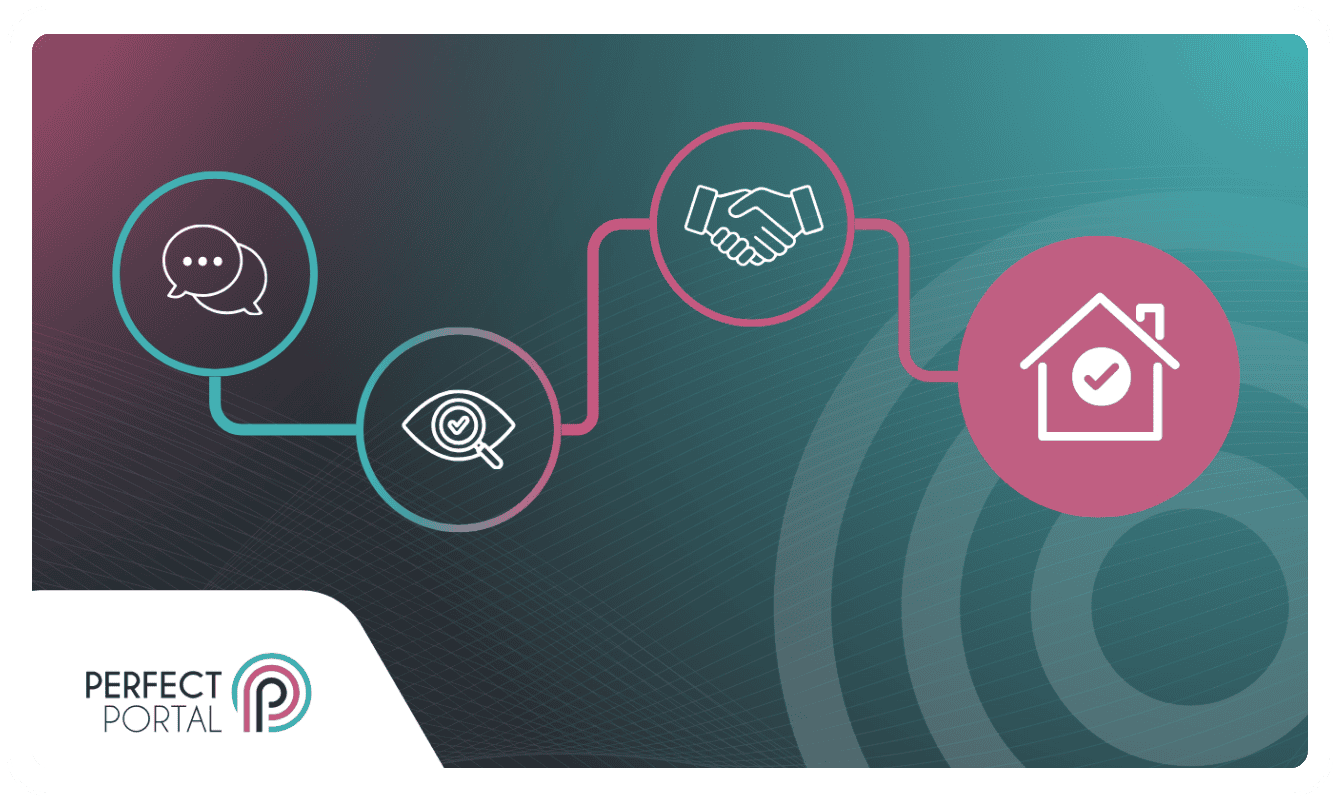
Greater visibility can have a significant impact on how clients experience the home moving process. When clients understand where they are, what they’re waiting for and what happens next, the journey can feel more reassuring and easier to navigate – even when progress is happening behind the scenes.
This blog explores why greater visibility matters for clients and firms, and how clearer communication can help build confidence throughout the conveyancing journey.
- Clients can feel uncertain when there is little visibility of progress
- Silence can easily be interpreted as a lack of activity
- Clients don’t necessarily want more communication – they want more useful information
- Greater visibility can help set expectations around delays and next steps
- Clearer communication can reduce unnecessary update requests for firms
Recent research found that one in ten homebuyers felt they were “never getting the whole truth” from their conveyancer. The findings highlighted concerns around communication, visibility, and a lack of transparency throughout the home moving process. It’s an uncomfortable headline for the legal sector, but it also raises an important question.
Are clients intentionally being kept in the dark, or are they simply not being given enough visibility into what’s happening?
Hopefully, for many firms, the answer is likely the latter.
The experience gap.
Conveyancing is rarely a process that stands still. Even during periods where there is little visible progress, legal work is often continuing behind the scenes. Searches are being reviewed, enquiries are being raised, third parties are being chased, and risks are being managed.
The challenge is that clients don’t always see that activity. Without regular communication or context, silence can easily be interpreted as inactivity. A lack of updates becomes a lack of confidence, even when work is progressing exactly as it should.
In many cases, the issue isn’t the legal work itself – it’s the visibility surrounding it.
Clients aren’t asking for constant updates.
There’s a common assumption that improving communication means sending more emails or making more phone calls. But that’s not necessarily what clients are looking for.
What many people really want is reassurance. They want to know that their matter is moving forward, understand why they might be waiting, and have confidence in what happens next.
Sometimes a quick and simple update when needed can have far more impact than constant communication. Setting expectations early, explaining why certain stages take time, and providing greater visibility of progress can make the entire journey feel much clearer.
The modern expectation of transparency.
In almost every other part of life, people have become used to seeing progress. Whether it’s tracking a parcel, checking a bank transfer, or following a food delivery, visibility has become part of the experience.
Buying a property is one of the biggest financial commitments many people will ever make, yet it’s often the process where people feel they have the least visibility.
That doesn’t mean every legal task can or should be tracked in real time. But it does highlight how expectations have changed. Clients increasingly expect to understand where they are in the journey, what they’re waiting for, and what comes next.
Supporting firms as well as clients.
Better communication isn’t only beneficial for clients. When expectations are clear and progress is easier to understand, firms often spend less time responding to update requests, explaining repeated stages, or reassuring anxious clients who simply don’t know what’s happening.
That creates a better experience on both sides. It’s not about adding more work – it’s about making the work that’s already happening more visible.
The conversation is shifting.
For a long time, conversations around improving conveyancing have focused on speed, technology, and compliance.
Those things remain important. But experience is becoming just as significant.
How the journey feels is shaping how clients judge the service they receive. Communication, clarity, and transparency are no longer “nice to have” – they’rebecoming central to building trust.
Perhaps the question isn’t whether firms are telling clients the whole truth. It’s whether clients are being given enough confidence to feel that they are.
If you’re interested in exploring how communication, visibility, and onboarding shape the overall client experience, download our Experience Gap guide for a closer look at where friction builds and what a better journey can look like.
RESOURCES
Insights to help
law firms work smarter
- CASE STUDY
How Lucas & Wyllys modernised the client journey with a connected legal technology ecosystem.
Discover how
- CASE STUDY
How Ridley & Hall scaled while delivering exceptional client experience with Perfect Portal.
Discover how
- CASE STUDY
How BLJ leveraged Perfect Portal for smarter data, clearer journeys and measurable growth.
Discover how
- CASE STUDY
How Cook & Talbot modernised client communication with Perfect Portal to win more work.
Discover how
- CASE STUDY
How GloverPriest unified systems and improved efficiency through Tikit P4W and Perfect Portal.
Discover how
- CASE STUDY
How Lyons Bowe improved their compliance and client experience with Perfect Portal’s digital onboarding solution.
Discover how
- BLOG
Top 5 reasons why integrated systems matter.
- BLOG
How to cut conveyancing onboarding from weeks to days.
- BLOG
The Perfect Portal Perspective: Home Buying & Selling Reform Series | Part 2
- BLOG
One journey, two experiences: why fixing client friction supports your team too.
- BLOG
How easy is it to instruct your law firm?
- BLOG
Why better client experience starts with better information.
- BLOG
The Perfect Portal Perspective: Home Buying & Selling Reform Series | Part 1
- BLOG
Why your clients need greater visibility.
- BLOG
Technology that supports better client experience.
- Webinar
App based digital onboarding solution: InfoTrack eCOS + Perfect Portal integration.
Watch recording