
Blog
Top 5 reasons why integrated systems matter.
October 12, 2026 | 5 min read
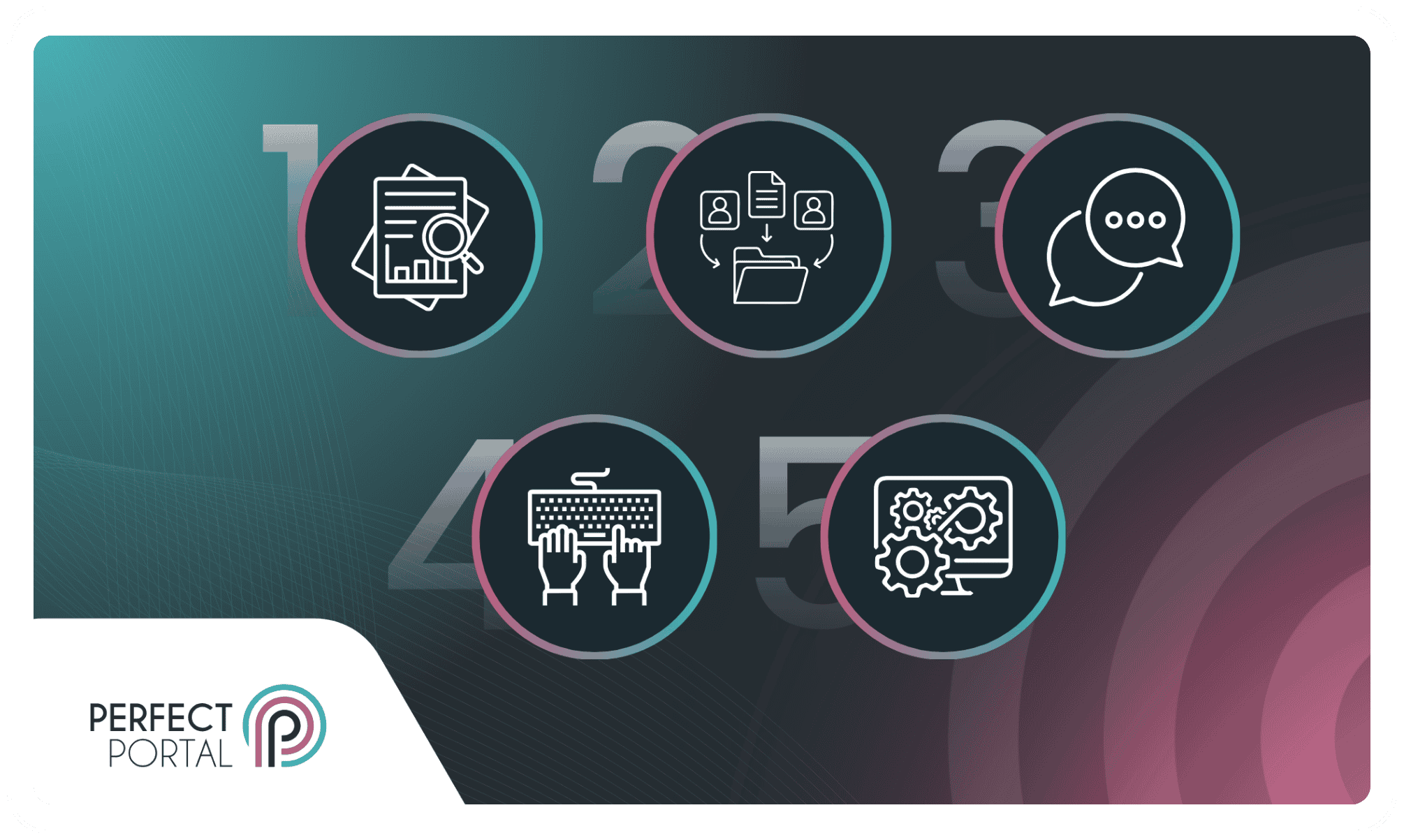
Technology has become a central part of how modern law firms operate. But as firms continue to introduce new software to support different parts of the client and business journey, integrated systems for law firms are becoming increasingly important.
Having the right technology in place is only part of the picture. If systems operate in isolation, firms can end up recreating the same problems they were trying to solve in the first place.
- Information gets lost across different systems
- Teams spend time moving or re-entering data
- Clients can experience disconnected communication
- Manual processes create more opportunities for errors
- Adding more technology can sometimes create more complexity
Integration isn’t about having fewer systems. It’s about making the systems you already use work better together.
1. Information should move with the client journey.
A client doesn’t experience a law firm’s systems as separate platforms.
They experience one journey.
From the first enquiry and quote through to instruction, client onboarding and beyond, information is collected at different points along the way. When that information doesn’t flow between systems, clients can end up being asked for the same details more than once.
For teams, that can mean manually rekeying information between platforms or checking different places to understand where a client is in the process.
Integrated systems help create continuity.
The goal isn’t simply to move data from one system to another. It’s to make sure the right information is available at the right point in the journey, without unnecessary repetition.
2. Less manual work means more time for people.
Some administration will always be part of running a law firm. But not all of it needs to be done manually.
When systems don’t connect, teams can end up spending time moving information between platforms, re-entering client details, checking whether something has been completed or updating the same information more than once.
Each task might only take a few minutes, but those minutes quickly add up.
Integrated systems can help reduce this unnecessary work, giving teams more time to focus on clients, matters and the work that really needs their attention.
3. Better data means greater confidence.
Every time information is manually transferred, there is an opportunity for something to be missed, entered incorrectly or become outdated.
That matters when the information is being used across multiple stages of a client journey.
Integrated systems can create a more reliable flow of information, helping firms maintain greater consistency across processes, communications and documentation.
It’s not about assuming that technology eliminates human error. It’s about reducing the number of points where unnecessary error can be introduced.
4. The client experience becomes more connected.
Clients don’t care which system a firm uses behind the scenes.
They care whether the experience feels straightforward.
If one stage of the journey feels digital and seamless, but the next involves repeating information, switching communication channels or waiting for a team member to manually move things forward, the difference is noticeable.
Integration can help create greater continuity between those stages.
That could mean information carrying through from a quote into client onboarding, actions being triggered at the right time, or updates being available without the client having to ask.
The technology itself becomes less important. The experience it creates becomes the focus.
5. Technology should reduce complexity, not add to it.
There is a temptation to solve every new challenge by introducing another system. But more technology doesn’t necessarily mean a more successful business.
If every new platform creates another place for information to sit, another login for teams to manage and another process to maintain, complexity can quickly increase. This is where integration becomes particularly important.
The question shouldn’t be “What other system do we need?” It should be “How can the systems we already have work together more effectively?”
That shift in thinking can make technology decisions much more strategic. Instead of building a collection of individual tools, firms can start using connected technology that supports the way people actually work.
Integration is about the bigger picture.
Integrated systems aren’t simply a technology decision.
They can influence how information moves, how teams work, how clients experience a firm and how easily a business can adapt as its processes evolve.
The strongest technology environments aren’t necessarily those with the most platforms. They’re the ones where the different systems work together without making the people using them think about what’shappening behind the scenes.
Because ultimately, integration should make things feel simpler – not more complicated.
RESOURCES
Insights to help
law firms work smarter
- CASE STUDY
How Lucas & Wyllys modernised the client journey with a connected legal technology ecosystem.
Discover how
- CASE STUDY
How Ridley & Hall scaled while delivering exceptional client experience with Perfect Portal.
Discover how
- CASE STUDY
How BLJ leveraged Perfect Portal for smarter data, clearer journeys and measurable growth.
Discover how
- CASE STUDY
How Cook & Talbot modernised client communication with Perfect Portal to win more work.
Discover how
- CASE STUDY
How GloverPriest unified systems and improved efficiency through Tikit P4W and Perfect Portal.
Discover how
- CASE STUDY
How Lyons Bowe improved their compliance and client experience with Perfect Portal’s digital onboarding solution.
Discover how
- BLOG
Top 5 reasons why integrated systems matter.
- BLOG
How to cut conveyancing onboarding from weeks to days.
- BLOG
The Perfect Portal Perspective: Home Buying & Selling Reform Series | Part 2
- BLOG
One journey, two experiences: why fixing client friction supports your team too.
- BLOG
How easy is it to instruct your law firm?
- BLOG
Why better client experience starts with better information.
- BLOG
The Perfect Portal Perspective: Home Buying & Selling Reform Series | Part 1
- BLOG
Why your clients need greater visibility.
- BLOG
Technology that supports better client experience.
- Webinar
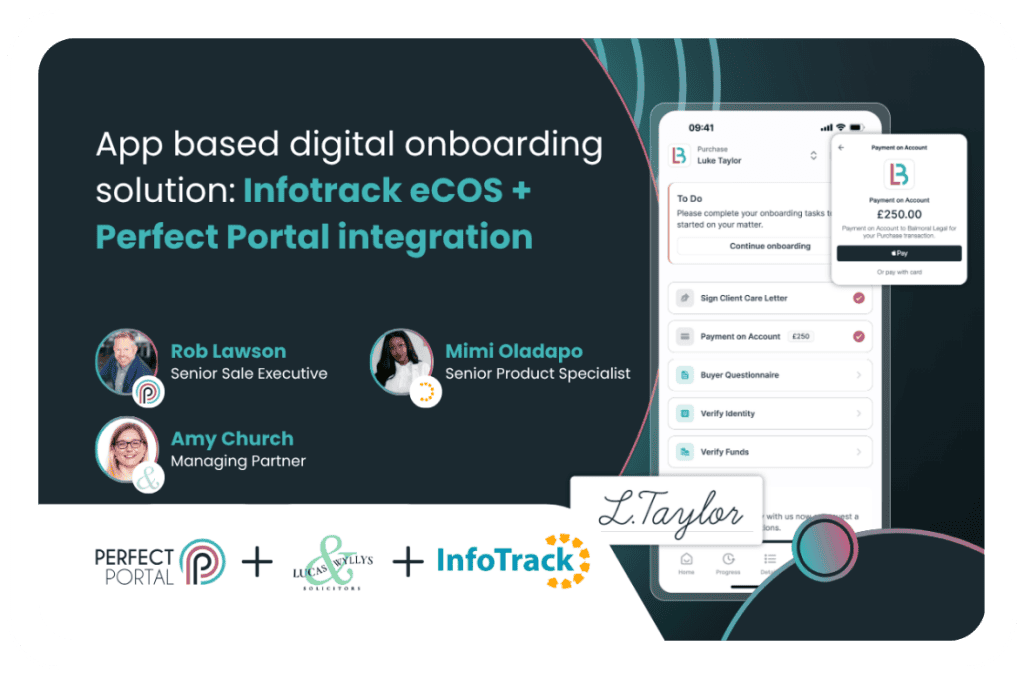
App based digital onboarding solution: InfoTrack eCOS + Perfect Portal integration.
Watch recording