
Blog
How to cut conveyancing onboarding from weeks to days.
September 23, 2026 | 4 min read
Conveyancing onboarding can often take far longer than it needs to. The checks themselves may be necessary, but delays can build up when information is collected in stages, clients aren’t sure what they need to do next, and teams are left chasing outstanding actions.
The opportunity isn’t to cut corners. It’s to look at how the onboarding process works as a whole and remove the friction that slows it down.
In this article, we explore:
- Why conveyancing onboarding can take weeks to complete
- How collecting the right information earlier can help keep matters moving
- The role of clear communication and client visibility
- Why disconnected systems can create unnecessary delays
- How firms can create a more consistent onboarding process
Why does conveyancing onboarding take so long?
Onboarding involves a number of important steps. Client details need to be collected, identity needs to be verified, Source of Funds information may need to be reviewed, forms completed, and client care documentation issued.
None of these things should be rushed.
But the time between steps often builds up.
A client might not understand exactly what is needed. A team member may need to check whether something has been completed before sending the next request. Information might need to be entered into more than one system. A missing document can mean the process pauses while someone follows it up.
Individually, these delays might seem small. Across every new matter, they can add up to days or even weeks.
The question isn’t simply how quickly each task can be completed. It’s how smoothly the whole process can move from one step to the next.
Start with the information you already have.
One of the simplest ways to reduce onboarding time is to avoid starting from scratch.
Information collected during enquiry and quoting can provide a useful starting point for onboarding. If clients have already provided key details, asking for the same information again creates unnecessary work for everyone, and another opportunity for information to become inconsistent.
A more connected process allows information to move forward with the client rather than being collected again at every stage.
Make the next step obvious.
Clients don’t necessarily know what the onboarding process involves.
Receiving a series of requests without much context can make the process feel more complicated than it actually is. Clients may not know what they still need to do, whether they’ve completed everything or what happens next.
Clear communication can make a significant difference.
Clients should be able to understand what they need to do, why it is needed and what happens next. For teams, that can mean fewer follow-up emails and phone calls and less time spent checking what is still outstanding.
Connect the process, not just the technology.
Technology can make onboarding faster, but simply digitising an existing process doesn’t necessarily make it better.
If a firm replaces a paper form with a digital form but still relies on manual follow-ups, separate systems, and repeated data entry, much of the underlying friction remains.
The bigger opportunity is to connect the different parts of onboarding so that information, actions and communication work together.
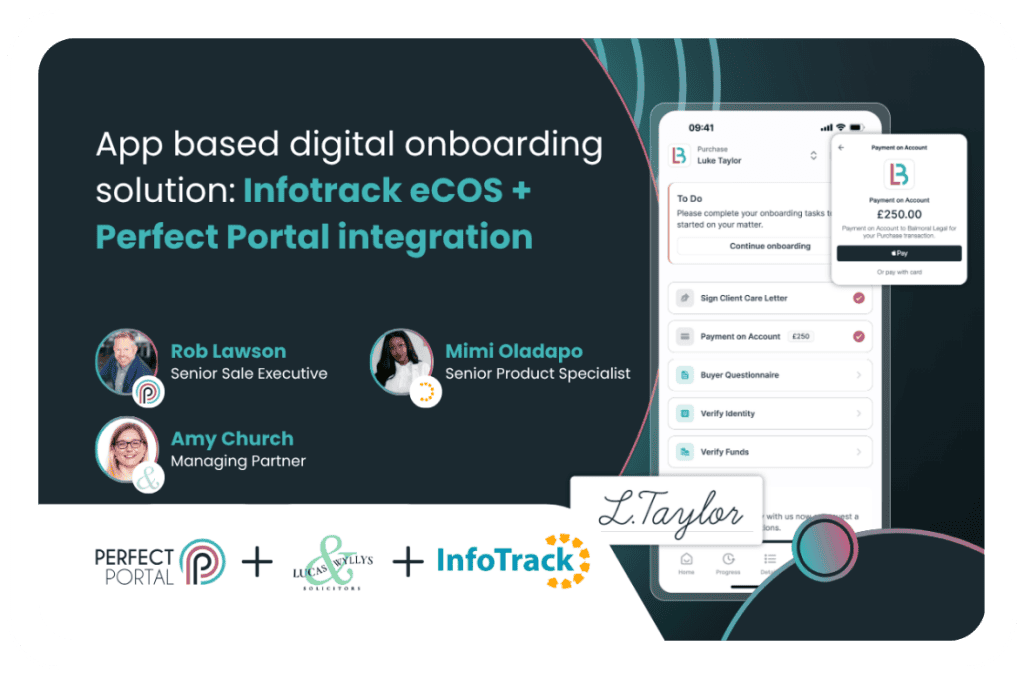
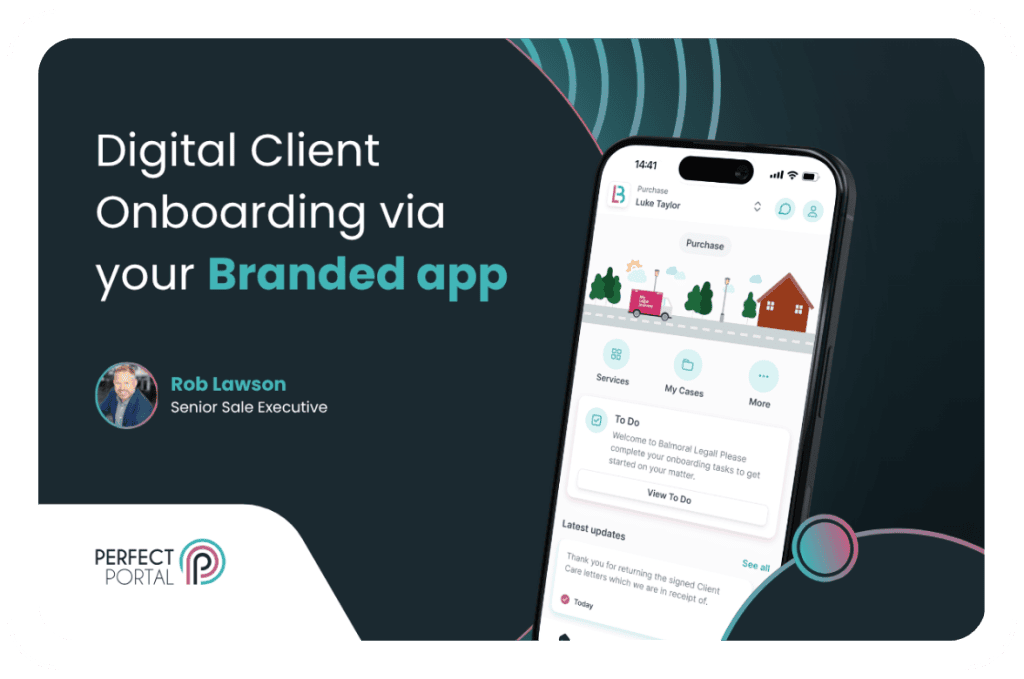
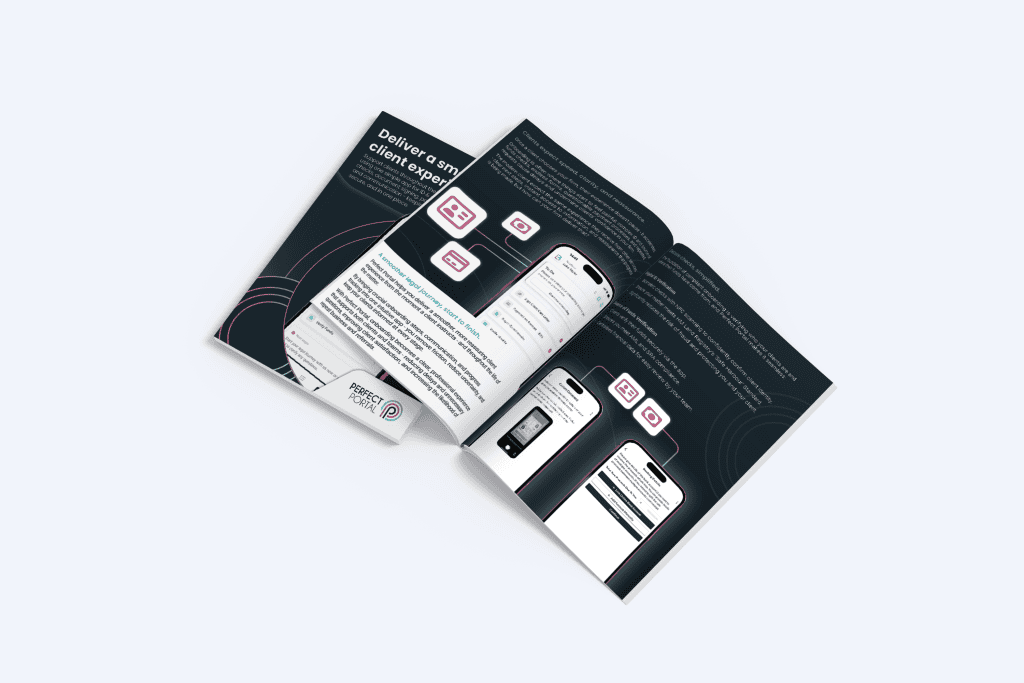
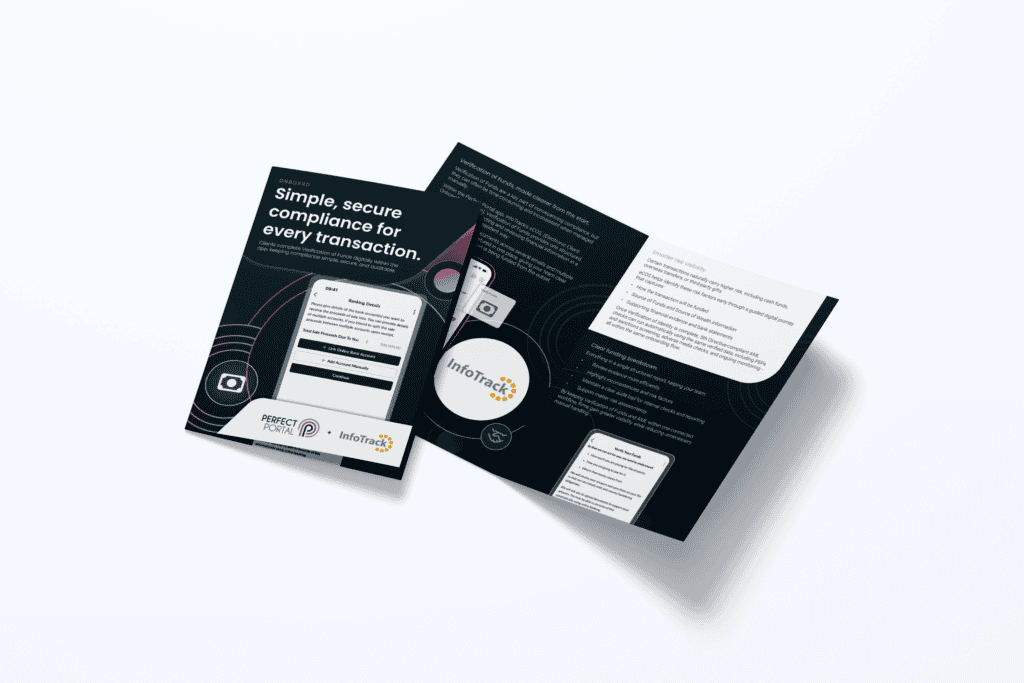
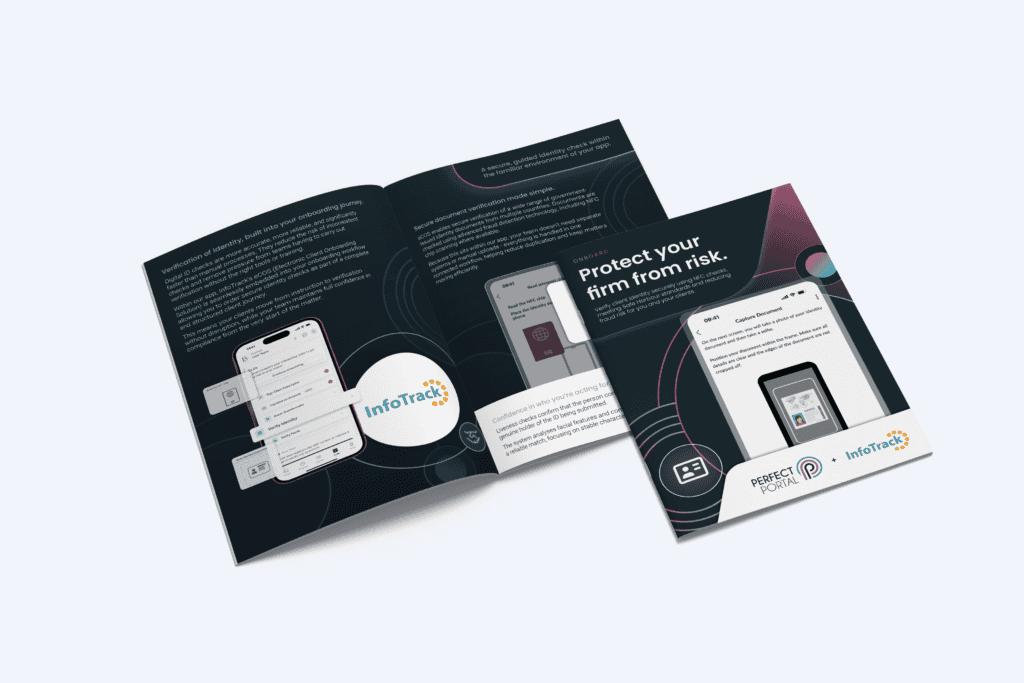
At Perfect Portal, we work closely with InfoTrack’s Electronic Client Onboarding Solution (eCOS) to support this approach. From the point of instruction, clients can complete key onboarding requirements digitally, including Verification of Identity, Verification of Funds checks, Client Care Letters and forms, while firms can manage the process through a connected workflow.
The aim isn’t simply to make individual tasks quicker. It’s to reduce the gaps between them.
From weeks to days starts with removing friction.
Cutting onboarding time doesn’t mean asking teams to work faster or clients to complete more at once.
It means looking closely at where time is being lost.
Where is information being requested twice? Where are teams manually checking progress? Where are clients waiting because the next step isn’t clear? Where are different systems creating extra work?
A faster onboarding process is ultimately about creating a more connected one. When information flows more easily, clients know what is expected of them, and teams have better visibility into progress, so the process has less opportunity to stall.
The goal isn’t to rush onboarding. It’s to remove the unnecessary waiting around it.
RESOURCES
Insights to help
law firms work smarter
- CASE STUDY
How Lucas & Wyllys modernised the client journey with a connected legal technology ecosystem.
Discover how
- CASE STUDY
How Ridley & Hall scaled while delivering exceptional client experience with Perfect Portal.
Discover how
- CASE STUDY
How BLJ leveraged Perfect Portal for smarter data, clearer journeys and measurable growth.
Discover how
- CASE STUDY
How Cook & Talbot modernised client communication with Perfect Portal to win more work.
Discover how
- CASE STUDY
How GloverPriest unified systems and improved efficiency through Tikit P4W and Perfect Portal.
Discover how

- CASE STUDY
How Lyons Bowe improved their compliance and client experience with Perfect Portal’s digital onboarding solution.
Discover how
- BLOG
Top 5 reasons why integrated systems matter.
- BLOG
How to cut conveyancing onboarding from weeks to days.
- BLOG
The Perfect Portal Perspective: Home Buying & Selling Reform Series | Part 2
- BLOG
One journey, two experiences: why fixing client friction supports your team too.
- BLOG
How easy is it to instruct your law firm?
- BLOG
Why better client experience starts with better information.
- BLOG
The Perfect Portal Perspective: Home Buying & Selling Reform Series | Part 1
- BLOG
Why your clients need greater visibility.
- BLOG
Technology that supports better client experience.
- Webinar
App based digital onboarding solution: InfoTrack eCOS + Perfect Portal integration.
Watch recording