
Blog
The experience gap in client onboarding (and why it matters more than ever).
April 20, 2026 | 5 min read
Onboarding works… but does it work well?
Client onboarding is one of the most important stages of any legal matter, shaping the very first impression a client has of your firm and setting the tone for everything that follows. It is where trust begins to build, expectations are formed, and the relationship starts to take shape.
From a process point of view, onboarding works. Information is collected, checks are completed, forms are filled in, and matters move forward.
But that doesn’t necessarily mean it works well.
For many firms, onboarding remains one of the most frustrating and time-consuming parts of the entire journey. Not because the requirements are unclear, and not because firms don’t understand what needs to be done, but because of how those requirements are delivered and experienced in practice.
When “working” doesn’t mean working well.
Across the sector, firms are successfully meeting compliance obligations. ID Verification is completed, Source of Funds checks are carried out, and the necessary information is gathered through forms. From an internal perspective, onboarding is structured, familiar and process driven.
However, that internal view doesn’t always reflect the full picture.
What feels routine and efficient within the firm can feel very different to the client. Processes that are second nature to legal teams can appear unclear or overly complicated to someone experiencing them for the first time. Instructions may not always be easy to follow, requests for information can feel repetitive, and the overall process can come across as more admin-heavy than expected.
And running through all of this, often less visibly, is communication. From initial requests to follow-ups, document sharing and updates, communication connects every part of onboarding. Yet in many firms, it sits outside of the process rather than supporting it, which is where things can start to feel disconnected.
When this happens at the very beginning of the relationship, it has a lasting impact.
Understanding the experience gap.
This disconnect is what we describe as the experience gap.
It is not a failure of compliance, and it is not a lack of process. It is the gap between what onboarding is meant to achieve and how it actually feels to go through.
Firms are doing the right things, but the way those processes are presented, communicated and managed can introduce unnecessary friction into the onboarding journey.
That friction is felt on both sides.
Internally, it often shows up as time spent chasing information, rekeying data across systems, and managing workflows that lack consistency. Externally, it manifests as confusion, delays and a lack of clarity around what is required and what happens next.
Over time, both firms and clients have come to accept this as normal. But normal doesn’t mean optimal.
Why this gap matters more than ever.
Client expectations have evolved significantly in recent years, shaped by experiences in other industries where processes are designed to be simple, transparent and easy to navigate. Whether it’s banking, retail or travel, people have become used to digital-first journeys that are intuitive and clearly guided.
Legal onboarding has not always kept pace with these expectations.
As a result, there is an increasing mismatch between what clients expect and what they experience when engaging with a law firm. This gap doesn’t just affect satisfaction in the moment; it influences how clients perceive the firm as a whole, from professionalism and efficiency through to trust and reliability.
And because onboarding happens right at the start of the relationship, it sets the tone for everything that follows.
Better experience doesn’t mean less compliance.
One of the most common concerns when discussing onboarding is the idea that simplifying the process could introduce risk. In reality, improving the experience is not about removing steps or reducing rigour, it is about delivering compliance in a way that is clearer, more structured and easier to manage.
When onboarding is designed with experience in mind, it often leads to stronger outcomes. Information is captured more accurately, processes become more consistent, and clients are better equipped to provide what is needed without confusion or delay.
Better experience and better compliance are not in conflict – they reinforce each other.
Rethinking how onboarding is delivered.
The challenge for firms today is not understanding compliance requirements, but delivering them in a way that works effectively for both their teams and their clients.
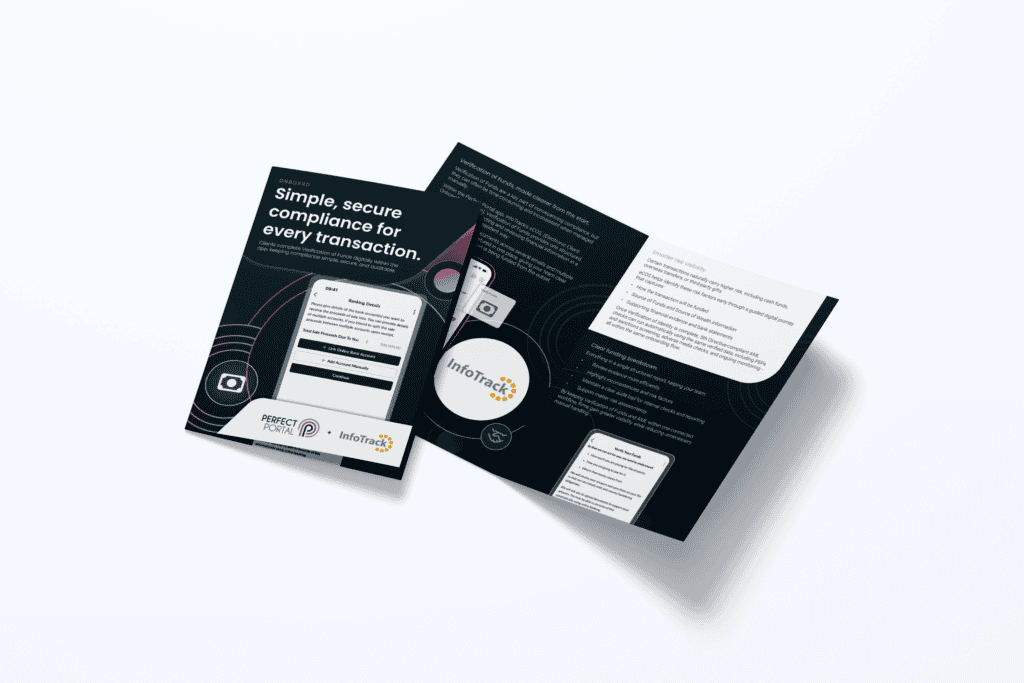
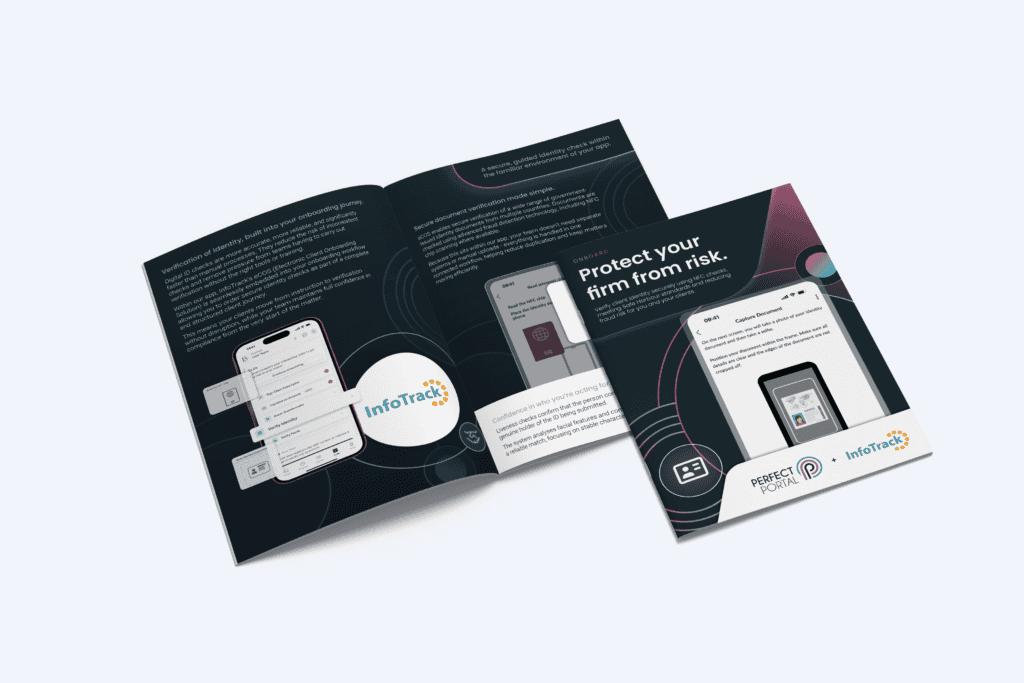
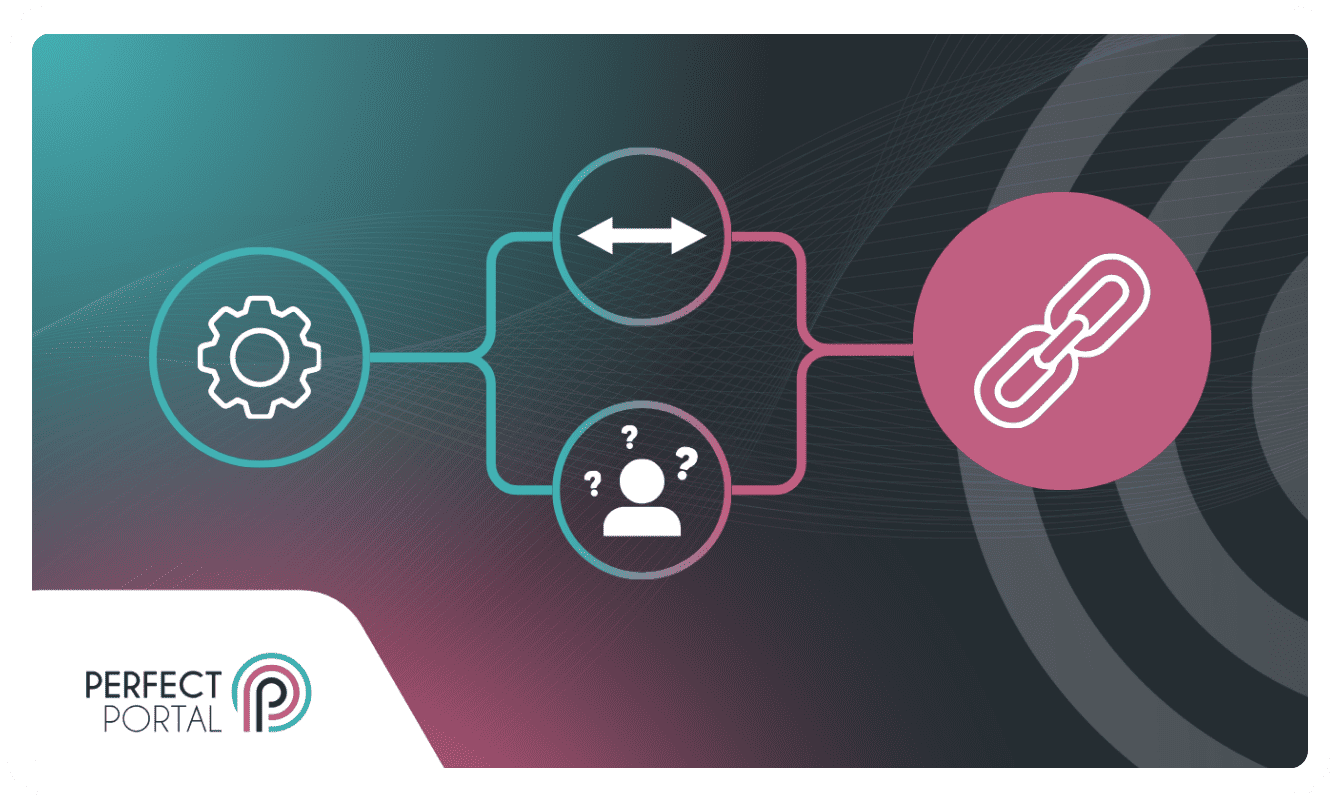
Onboarding is not a single step. It is a combination of ID Verification, Source of Funds checks and digital forms, all brought together through ongoing communication. When these elements are handled across disconnected tools and processes, the experience becomes fragmented. When they are structured and connected, onboarding becomes clearer, faster and easier to manage.
This is exactly what we explore in our latest guide.
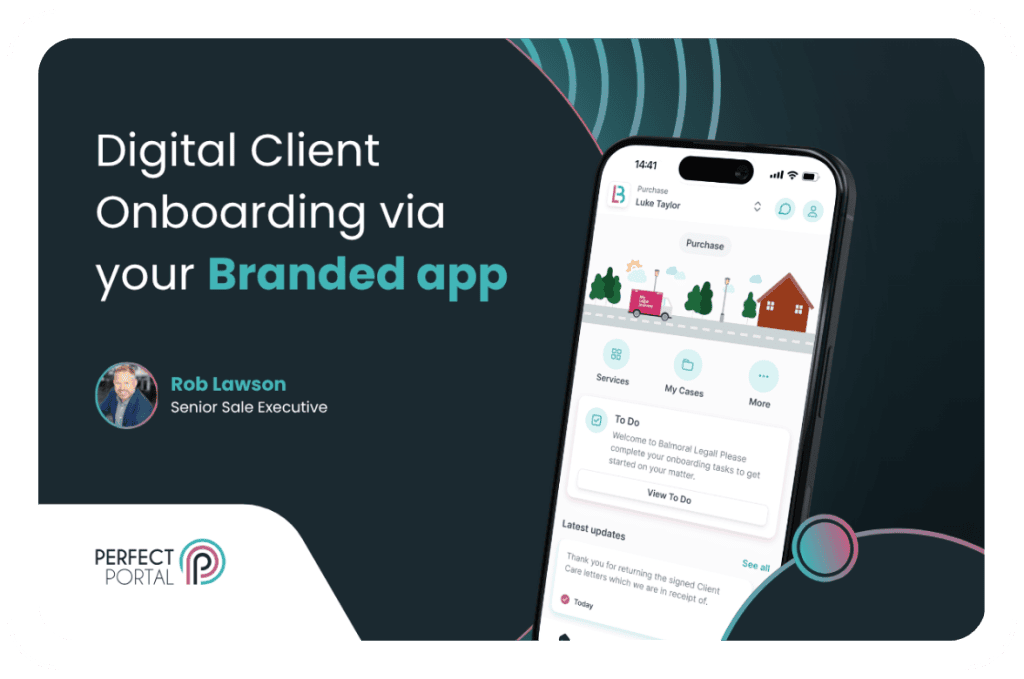
It takes a closer look at the full onboarding journey, highlighting where friction typically builds, why it has become widely accepted, and what better onboarding looks like in practice, both for fee earners managing the process and for clients going through it.
If any part of your onboarding process feels slower, more manual or more complex than it should be, this guide will help you rethink how it’s delivered.
Get early access.
Onboarding isn’t broken – but it can be better.
Register now for early access and be among the first to receive the guide when it launches.
RESOURCES
Insights to help
law firms work smarter
- CASE STUDY
How Lucas & Wyllys modernised the client journey with a connected legal technology ecosystem.
Discover how
- CASE STUDY
How Ridley & Hall scaled while delivering exceptional client experience with Perfect Portal.
Discover how
- CASE STUDY
How BLJ leveraged Perfect Portal for smarter data, clearer journeys and measurable growth.
Discover how

- CASE STUDY
How Cook & Talbot modernised client communication with Perfect Portal to win more work.
Discover how
- CASE STUDY
How GloverPriest unified systems and improved efficiency through Tikit P4W and Perfect Portal.
Discover how

- CASE STUDY
How Lyons Bowe improved their compliance and client experience with Perfect Portal’s digital onboarding solution.
Discover how
- BLOG
How easy is it to instruct your law firm?
- BLOG
Why better client experience starts with better information.
- BLOG
The Perfect Portal Perspective: Home Buying & Selling Reform Series | Part 1
- BLOG
Why your clients need greater visibility.
- BLOG
Technology that supports better client experience.
- BLOG
5 best practices for creating a better client experience.
- BLOG
Bold Legal Group Conveyancing Conference 2026: Data, digitalisation and the future of conveyancing.
- BLOG
What a better client journey looks like.
- BLOG
Is your legal client onboarding actually working for your team?
- Webinar
App based digital onboarding solution: InfoTrack eCOS + Perfect Portal integration.
Watch recording